By Bailey Kelley-Weaver
Transcript:
Dunstable Crown Jewel and the Paston Letters: An Analysis
Travel in the Middle Ages was a hard and sometimes risky business. It was characterized by slow communication, bad infrastructure, and uncertainty. Despite all these challenges, people still managed to travel for various reasons. These reasons include political obligation, trade, and religious commitment. To understand medieval travel, one has to look not only at written
evidence but also at physical objects, which offer evidence of how medieval people experienced and expressed their travels.
One way to understand medieval travel is through personal correspondence. Personal correspondence gives us an idea of how travel was conducted in the Middle Ages. On one hand, objects such as badges and jewelry offer evidence of how travel impacted one’s social status.
Traveling during the Middle Ages was risky and slow, but at the same time, there were those who made it their choice to travel. Some of the major causes for traveling during the
medieval period included pilgrimage, a religious journey to a place of worship. This is shown through the letters of the Paston family as it shows how traveling was part and parcel of the life of people living during the fifteenth century. The letters of the Paston show how people used to communicate as they traveled in the English countryside.
This has also been seen in the Paston Letters, where it was realized that travel was linked to responsibility and obligations. There was a need for the Paston family to travel between
different places in response to the need to manage land, settle disputes, and react to political changes. Since information was physically transferred, it meant that traveling was a crucial
aspect in the transfer of information. Any delay in traveling could mean missing the opportunity or a major consequence.
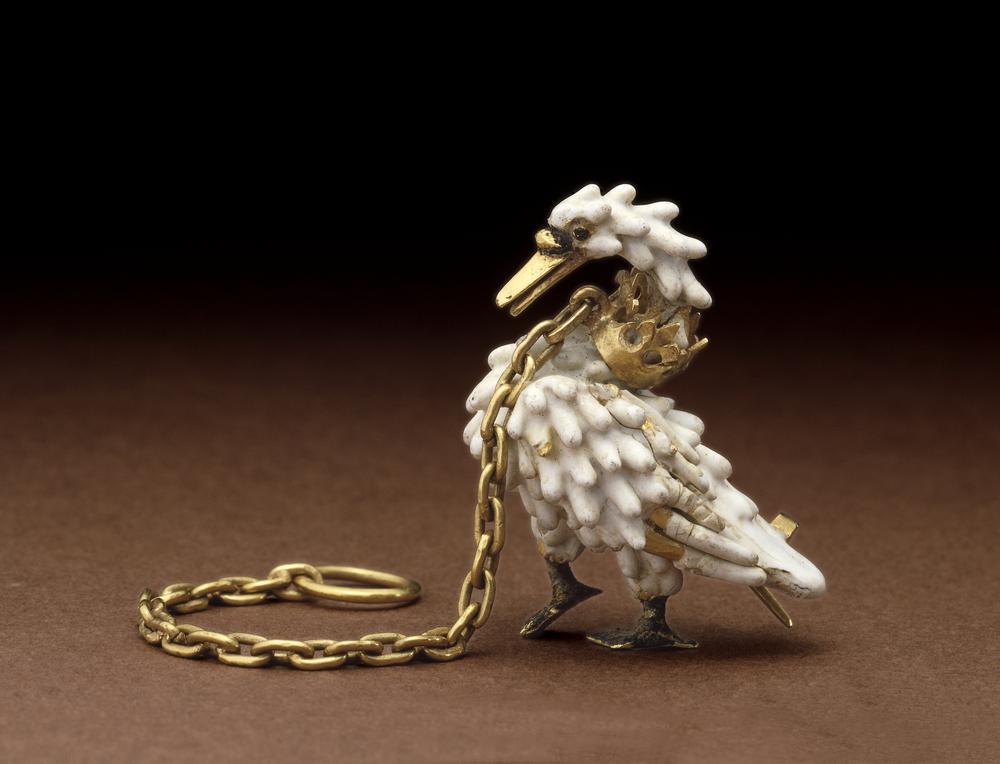
The Dunstable Swan Jewel is an object that represents the culture of the Middle Ages, particularly regarding traveling. This is a gold object from the Middle Ages, currently residing in the British Museum. This type of object was worn on clothing to indicate allegiance,
identification, or participation in significant social and religious activities. Pilgrims used these objects to indicate that they had been to a particular site, a holy site.
The Dunstable Swan Jewel is another indicator that identity played a vital role in the medieval period which was characterized by traveling. Unlike pilgrim badges which were
created using less expensive metals and designs, the Dunstable Swan Jewel was made of gold and enamel and, thus, had to belong to someone with a higher status within the medieval
community. The Dunstable Swan Jewel symbolized loyalty to a prominent family or leader.
Traveling in a medieval world was not just a means to an end; it was also a means to be recognized. With items like the Swan Jewel, a medieval member of society was able to express
their affiliations and achievements publicly. In a medieval world where a member of society was a stranger to almost everyone he or she came across, this was a vital concept.
Based on an analysis of the Paston Letters and the Dunstable Swan Jewel, it is evident that traveling in the Middle Ages was a vital and symbolic act. It not only helped a member of medieval society communicate and survive in a medieval world but also helped a member of medieval society express him or herself and their ideas. These two sources can be used to help us get a better understanding of the impact of traveling in the Middle Ages.
Bibliography:
Primary Sources
Dunstable Swan Jewel, from England. London, British Museum, Object Number 1966,0703.1.
The Paston Letters, Part I. Edited and translated by Norman Davis, Project Gutenberg, 2013, www.gutenberg.org/files/43348/43348-h/43348-h.htm
Secondary Sources
Jusserand, J. J. English Wayfaring Life in the Middle Ages (XIVth Century). Project Gutenberg, 2018. https://www.gutenberg.org/ebooks/58530
Sorabella, Jean. “Pilgrimage in Medieval Europe.” Heilbrunn Timeline of Art History.
New York: The Metropolitan Museum of Art, 2000.
Leave a Reply